Table Of Content

Also, construction 3D printers can finish a home’s foundations in less than a few days, while traditional construction methods take several weeks or even months. Concrete 3D printing in the construction industry helps save time, effort, and material compared to traditional construction methods. It’s important to note, though, that 3D printers are not yet capable of creating a fully functional house. Three-dimensional-printed houses first hit the U.S. market at the start of 2021.
Examples of 3D-Printed Houses
"ICON claimed that its technology "could" 3D print the building in 24 hours, but provided no documentation to prove it" (COBOD). For example, the house built in Windsor-Essex by Habitat for Humanity (Hh) was not built in 3-4 days, as mentioned by Chris Marin, lead 3D home printer operator (ICI Windsor, 2022). So, while at first glance the idea of 3D printing homes seems interesting, would it really allow us to choose a predefined model online and agree on a date to "print" our house on any site, quickly and at as low a cost as we've read?
Are shipping container houses environmentally friendly & good or bad to live in?
Still constructed with ICON’s Vulcan construction technology, the walls for all four houses took one week to 3D print, which would typically take much longer traditionally. On the design side, Lok sees opportunity to one day offer customized features at a mass scale, without excessive labor costs. For example, she's employed 3D printing to create unique, built-in shelving for various living spaces in the Houston home.
Havelar pioneers Portugal's first affordable 3D printed house - 3D Printing Industry
Havelar pioneers Portugal's first affordable 3D printed house.
Posted: Wed, 24 Apr 2024 07:33:36 GMT [source]
CyBe Construction
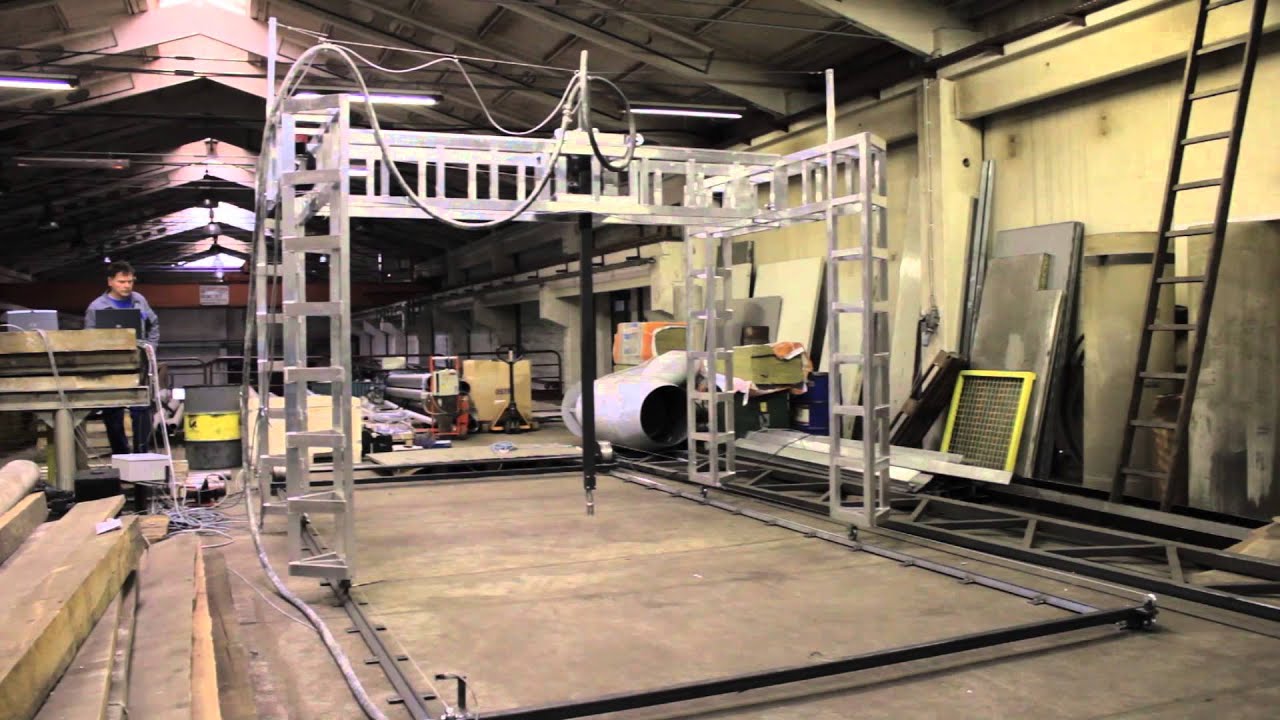
NASA’s 3D-Printed Habitat Challenge has given life to a number of teams dedicated to bringing 3D printing to space. The goal is to create sustainable and efficient 3D printed housing for deep space exploration. The XL 3D printer was created by DUS Architects to build a prototype canal-house (simply dubbed “3D Print Canal House”) in Amsterdam using recycled materials. The Crane WASP is the evolution of WASP’s previous construction printer, the BigDeltaWASP 12MT. This open source construction printer is modular and multiple Crane printers can work together on one project, for theoretically infinite 3D printing possibilities.
3D printing can also eliminate the need for time-consuming assembly of individual components since the printing of walls and other features can be done in a continuous operation. In development with 3D-printing firm WASP, Italy-based studio Mario Cucinella Architects set out to create bioclimatic, low-carbon proof-of-concept housing in response to escalating climate emergencies and housing crises worldwide. Standing out from the crowd, Tecla’s tan, double-dome structure is constructed out of 350 layers of locally sourced clay from a nearby riverbed. A portmanteau of “technology” and “clay,” Tecla is a 538-square-foot structure that stands at about 15 feet tall and features two skylights. Of the 200 hours it took to fully construct the project, the active printing time lasted 72 hours. In just three weeks, Belgian company Kamp C 3D printed its namesake demo house in one piece, at the property location.
The university wants to show how homes can be constructed nearly entirely by a printer with a lower carbon footprint. Dagher said there’s a shortage of both affordable housing and workers to build homes. When it comes to the supplies needed to build a 3D home, some of the materials and tools will be exactly the same tools you’d need to build a house with traditional methods. There are other tools and materials that are unique to building a 3D printed tiny house. In the United States, 3D printed houses must follow all of the same legal building codes, rules, and regulations as a traditionally built house at this time. As a guy with a natural fascination for both building houses and technology, the idea of 3D printing a house is right up my alley.
American company Apis Cor famously 3D printed an entire house in just a single day back in December 2016, going viral and commanding worldwide attention for this extraordinary feat. Located in the Russian town of Stupino, the igloo-style house was the first 3D printed residential house, completed with the help of PIK, a Russian real estate company. Since then, Apis have won NASA prizes for potential space 3D printing techniques for creating structures on Mars. ICON’s Vulcan construction system 3D printed the walls of House Zero in less than two weeks using a proprietary cement-like material, insulation, and reinforced steel. Using only these 3 raw materials, this process drastically cuts down construction times and raw materials.
Durability of 3D printed houses
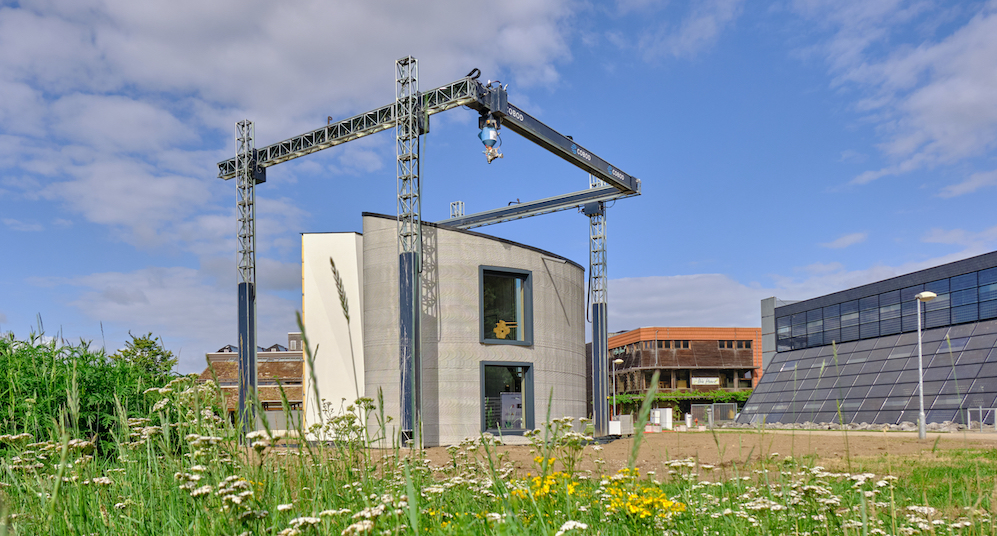
Their latest model, the CyBe G, is gantry-based with a four-column, three-beam configuration, ideal for affordable housing construction. At 500 mm/s, the CyBe G boasts of one of the fastest printing speeds for 3D printed house construction. The Dutch house 3D printer company has two construction 3D printer models, the CyBe RC 3Dp, and CyBe R 3Dp, able to print structures quickly at up to 200mm/s. They also use patented materials based on concrete mix, and claim they can fully construct houses for under $100,000.
House 3D printers available for sale
Some companies use geopolymers or other material mixtures that are concrete-like, but are not classified as concrete. Compared to concrete block and precast panel construction 3D-printed houses are expected to have a much longer lifespan — minimum of 100 years. Assuming there is no separation between the 3D printed layers and appropriate hydration is maintained during the construction process, 3D printed houses have the potential to last over 300 years. This is due to the material's strength and density and the geometry's ability to handle stress.
However, the safety of a 3D-printed structure will depend on the quality of the materials used and the construction process, just as it would for any traditionally constructed building. 3D printers do, however, allow for greater precision in construction, which could result in more accurate and reliable structures. 3D printing can also be used to create other structures, such as bridges and commercial buildings, and offices. The world's first 3D-printed skyscraper, which will be featured in Dubai, is underway. Their 3D printing material, Lavacrete, is composed of a blend of Portland cement, fillers, supplementary cementitious materials, and advanced additives.
It’s a low-energy home with a green roof but still manages to blend seamlessly into the surrounding architecture. Rancho Mirage has the potential to become the future blueprint of neighborhoods moving forward, not only for its immense sustainability but also for the incredible solution it poses for the global housing crisis. We have also published the complete history of 3D printing, which you can view here.
Many other companies have been involved in space-building projects, including the European Space Agency and Elon Musk’s SpaceX. It is possible that we will see the first space house 3D printers in space sometime in the next couple of decades (!). Aside from housing or buildings, construction 3D printers are able to 3D print bridges and space-station infrastructures. According to MudBots, their 3D printers can 3D print a small house in only 12 hours and can drive costs down 70% compared to traditional construction methods.


No comments:
Post a Comment