Table Of Content

Even 3D printed houses have a rougher exterior, post-processing is an option just as it is for regular 3D printed objects. 3D printed houses tend to be smaller due to 3D printer build volume limits, but this is not always the case. A construction 3D printer is a machine that can build houses by depositing a material (concrete for example) layer by layer. Concrete 3D printing – a.k.a. “Construction 4.0” – is a similar 3D printing technology to the one that FFF 3D printers use. Paste-type material, in this case, concrete or earth materials, is pushed through a nozzle in layers to print buildings in 3D.
The world’s biggest 3D printer can a make a house in under 80 hours
The company makes use of a simplified blend of typical concrete materials for construction printing. This is an advantage because it can easily be understood by building departments, builders, and approval bodies, unlike some custom building mixes that other companies use. 3D printing technology is starting to gain a lot of attention as a promising solution for house construction. This innovative technology has many benefits, such as allowing for the creation of complex and customized designs with less material waste, and faster construction times than with traditional methods. As a result, the market for 3D printers designed specifically for house construction has grown rapidly in recent years. Dagher said there's a shortage of both affordable housing and workers to build homes.
The best lumber choices for wood frame construction of homes
Building a 3D printed tiny house can be more cost effective, time efficient, and just as structurally durable as a traditional home. These four Austin, Texas properties by construction 3D-printing company ICON feature open-floor plans, minimal architectural aesthetics and private yards. Varying in size, these residences feature two to four bedrooms and range from 1,000 to 2,000-square-foot homes. Each ground floor level is built with a proprietary cement-based material, dubbed “Lavacrete,” to last longer than traditional construction materials, according to the company’s website.
CyBe Construction
The 1,407-square-foot house — complete with three bedrooms, two baths and a two-car garage in Riverhead, New York — listed as “the world’s first 3D-printed home for sale” for $299,999 on Zillow.com. Typically, 3D-printed houses feature free-form, curvilinear shapes made out of a cement mix. Projects span from inhabitable beta prototypes under study to move-in-ready affordable housing and even high-end luxury homes. 3D-printed houses can be made in a matter of hours at a fraction of the cost of conventional construction methods. In poorer areas with few skills builders and little building material available, large house printers such as those by ICON and New Story offer a fantastic way to build basic huts and 3D printed shelters.
3D Printing Industry Statistics (2024 Update)
The most accurate project in terms of a 3D printed house’s cost is the French build in number 2 on our ranking. This project cost around $170,000 and was roughly 20% than traditional methods would have cost. Like New Story’s plans for the developing world, this interesting prototype may form the basis for building houses in poorer countries.
Step into the future – 3D-printed houses are here and in high demand
The world's largest 3D printer, housed at the University of Maine in Orono, Maine, has a voracious appetite, consuming as much as 500 pounds of material per hour. A cross section of an exterior wall of a house is printed Oct. 12 on a 3D printer at the University of Maine's Advanced Structures & Composite Center in Orono, Maine. Looking ahead, researchers plan to tinker with the material consumed by the machine, including more bio-based feedstocks from wood residuals that are abundant in Maine, the nation’s most heavily forested state. When it comes to designing the floorplan or blueprint of your 3D home, a designer will create the basic blueprint, and that blueprint will be sent to the modeling software so the printer is prepared to do its work. There are many ways you can design a 3D printed home to fit your lifestyle needs.
Though far from being perfected, the potential with 3D printed houses is exciting. It has proven to work and stand up to the elements in Europe and the USA, and really can work faster and more efficiently than people. Another recent viral story, this collaboration between ICON and New Story made headlines when they 3D printed a house in Texas, USA earlier this year. The prototype 3D printed house built cost the companies approximately $10,000, though they assert that this number can be brought down to $4,000 going forwards. Apis Cor’s build brought 3D printed structures into the public eye, encouraging others to get involved and democratize 3D printed house building.
Bio-based materials are designed to produce homes at scale
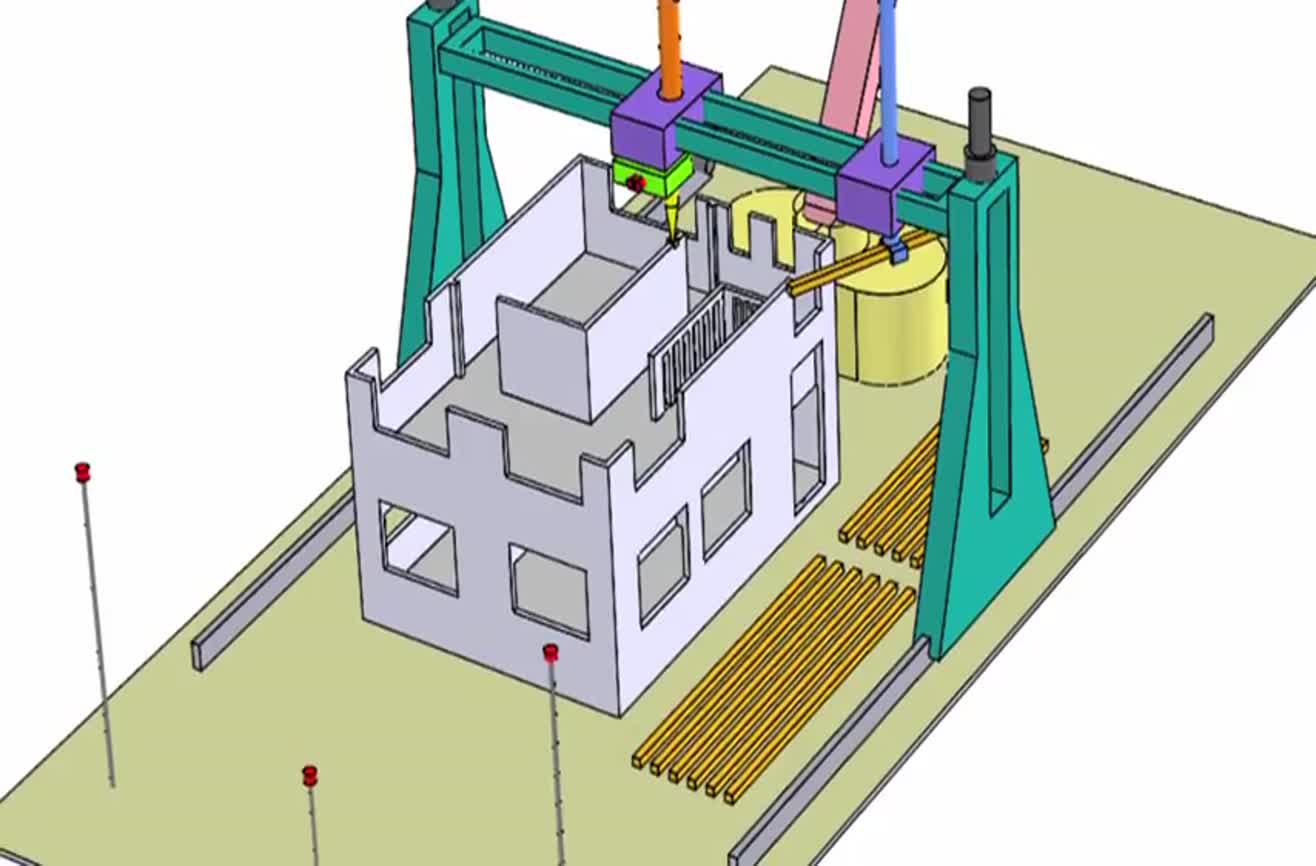
Unfortunately, the build size is a bit smaller than for other printers on this list. When buying this printer, you get a turnkey solution with all the equipment you need to start printing, all in a 20-foot container that’s ready to be shipped to the construction site. It suffers from the same disadvantages as other robotic-arm printers, such as a limited print area and the need for specialized software to operate them.
The world's largest 3D printer is at a university in Maine. It just unveiled an even bigger one - WBUR News
The world's largest 3D printer is at a university in Maine. It just unveiled an even bigger one.
Posted: Wed, 24 Apr 2024 09:49:56 GMT [source]
The print size for a single Crane WASP printer is very small compared to that of the other printers on this list. In addition to printing concrete, WASP’s 3D printer is also able to print earth materials. Fabian Meyer-Broetz, head of 3D construction for Houston-based construction company Peri, said his company expects to complete construction on a 3D-printed home for Habitat for Humanity in Tempe by mid-February. Peri officials said the company’s 3D-printed projects included an apartment building in Beckum, Germany. Proponents of the technology in recent years have pointed to 3D-printed homes as an innovative step toward addressing housing needs in the United States and elsewhere.
Peri, like several construction firms, hopes to make housing more affordable and viable to a broader range of people, Meyer-Broetz said. Using a larsen truss system, for example, is a quick and effective way to build a very efficient structore from biosourced materials. According to the University of Maine, the state's sawmills produce nearly one million tons of wood residuals every year. Since each 600-square-foot unit requires approximately 10 tons of wood residuals, 100,000 housing units could theoretically be produced every year using just sawmill residuals. "What's more innovative about this project [than other 3D housing initiatives] is both that it's bio-based, and that it's geared fully toward addressing the housing crisis," says Goerhke.
Utilizing ICON‘s Vulcan robotic construction systems, sophisticated software, and advanced materials, these homes are swiftly and efficiently delivered at scale. The construction process minimizes waste and provides unparalleled design freedom by 3D-printing the entire wall system, both interior and exterior walls. While construction 3D printing has been around for over a decade, the technology has only started to break ground in the U.S. homebuilding market over the last couple of years, said Leslie Lok, the architectural designer for the project. Several 3D-printed homes have already been built or are currently in the works across a handful of states. For example, the cost for 1 square meter of a wall using traditional construction methods is approximately $75, whereas with the Apis Cor house 3D printer it is only $27.
Bologna-based architecture studio Mario Cucinella Architects and 3D-printing specialists WASP collaborated to create a 60-square meter low-carbon housing prototype named Tecla – a combination of the words technology and clay. The entire building, including its roofs and foundations, is made of low-cost real concrete using a large construction 3D printer by COBOD. Proponents of the technology say 3D printing could address a range of construction challenges, including labor shortages and building more resilient homes in the face of natural disasters.
The process of 3D printing is also faster and more automated, reducing the risk of human error, leading to increased productivity, and allowing projects to be completed quickly and with minimal disruption. The University of Maine Advanced Structures and Composites Center is 3D-printing housing structures exclusively from bio-resins and wood fibers to combat labor shortages and widen access to affordable housing. The demo project, known as BioHome3D, begins with a 600-square-foot prototype that features a fully 3D-printed floor and roof. As a whole, the one-bedroom, one-bathroom building is 100-percent recyclable, made up entirely of biodegradable materials, including wood flour. As a prototype, BioHome3D is equipped with monitoring sensors, measuring thermal, environmental and structural elements, to gather resilience-based data to better inform future designs. Their 3D printer, nicknamed “Frank,” is a robotic arm-style printer with a maximum build size of 8.5 x 1.6 x 1.5 meters.
More recently, in 2019, Shanghai became home to the world’s longest concrete 3D printed bridge. This does save whatever amount of time it usually takes for a standard team to build walls for a certain project. Various construction 3D printer manufacturers such as Apis Cor or ICON boast that they are able to 3D print a small house in 24 hours. As mentioned before though, print jobs generally only include laying down the house’s foundations and walls. However, since construction 3D printing is still in its early years, it is difficult to provide definitive statements about how long it takes to 3D print a house and how much it costs to 3D print a house. The D-Shape 3D printer is a multifunctional construction 3D printer that can 3D print very large objects, including houses and prototypes.
3D printed houses are likely not as cheap as the companies who have built 3D printed houses claim they are. They only list the cost of the house in terms of the materials consumed to build it, omitting key factors such as labor, the cost of the printer (renting or buying), interior and external finishing, and wiring, pipes and other key foundations. Therefore, 3D printed houses offer a solution to this lack of skilled builder problem.


No comments:
Post a Comment